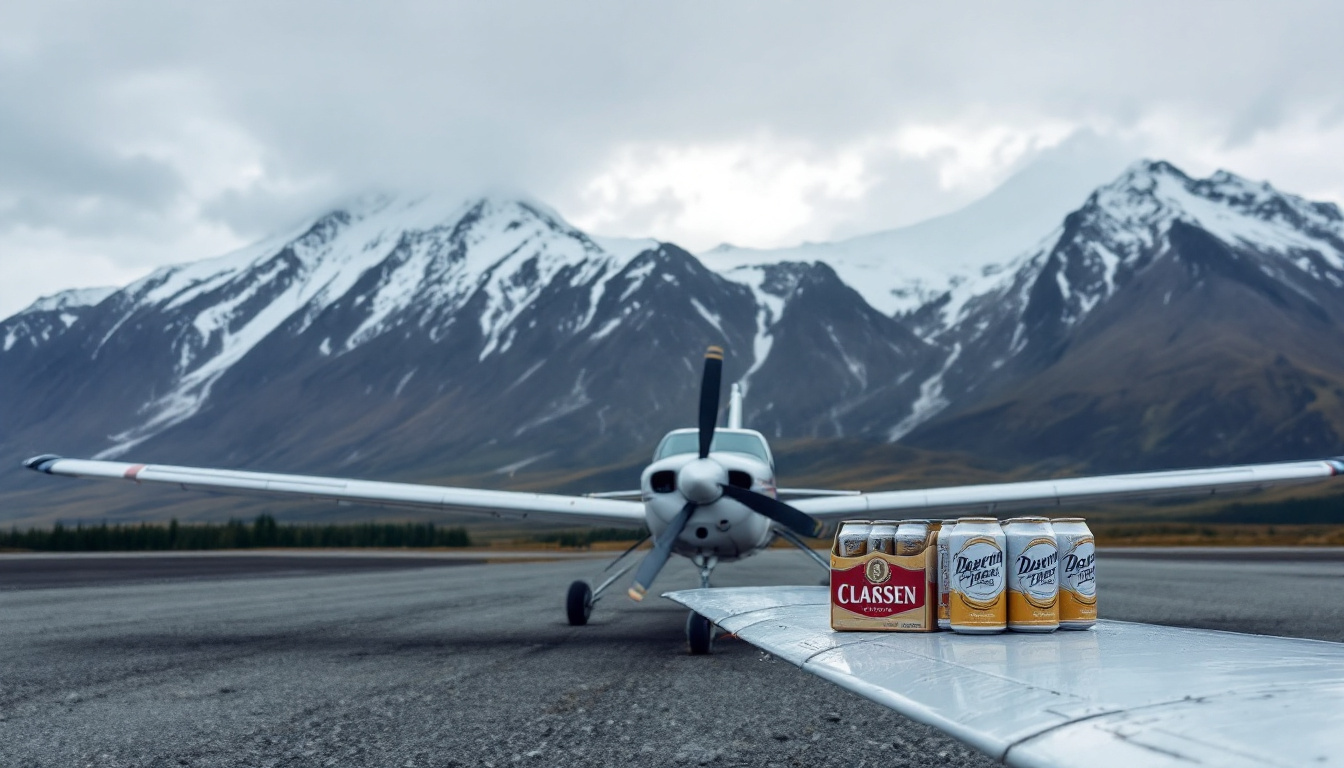
Kenneth Jouppi was sitting on the runway in Fairbanks back in 2012, preparing to fly a passenger and her groceries to the remote village of Beaver, when Alaska state troopers showed up and searched his 1969 Cessna airplane. What they found was three cases of beer — two Budweiser, one Bud Light — tucked into the passenger's luggage, destined as a birthday gift for her husband.
The state seized his plane over the passenger's infraction. Fourteen years later, they still have it.
Beaver had voted to go completely dry in 2004, banning the sale, import, and possession of alcohol within village limits. Jouppi, who ran a one-man air taxi service, was convicted of a misdemeanor for knowingly transporting alcohol into the community. The trial judge handed down $1,500 in fines, three days in jail, and three years of probation. Proportional, if not harsh.
But Alaska wasn't finished. The state pursued civil forfeiture of Jouppi's airplane — a personally owned 1969 Cessna valued at roughly $95,000. That's a $95,000 penalty on top of the criminal sentence, for a misdemeanor involving beer that wasn't even his.
The case, Jouppi v. Alaska (Docket No. 25-246), has wound through Alaska's courts for more than a decade. In 2018, a trial court ruled the seizure would constitute an excessive fine under the Constitution. Then the Alaska Supreme Court reversed that decision in 2025, upholding the state's right to confiscate the plane. Jouppi petitioned the U.S. Supreme Court last August, and on Monday, the justices agreed to hear it.
Jouppi is now 82 years old.
His legal team has framed the case in terms that are hard to argue with: "The Excessive Fines Clause was built for cases like this." The Eighth Amendment doesn't have a lot of ambiguity on the subject. The government cannot impose fines grossly disproportionate to the offense. A $95,000 asset seizure over a misdemeanor beer transport — where the beer belonged to a passenger — would seem to qualify.
The Cato Institute has noted that governments generate billions of dollars in revenue through civil and criminal asset forfeiture nationwide. It's a system where the financial incentive runs in exactly the wrong direction: the agency that seizes the property often gets to keep the proceeds.
The Supreme Court addressed this territory in 2019 with Timbs v. Indiana, ruling unanimously that the Excessive Fines Clause applies to state and local governments. But Timbs left open the question of exactly how courts should measure whether a forfeiture is "excessive." That's what Jouppi v. Alaska will answer — specifically, whether courts must weigh the gravity of the individual defendant's conduct against the value of the property seized.
SCOTUS is expected to hear oral arguments during the term beginning October 2026, with a decision likely by summer 2027.
Fourteen years and one man's entire livelihood for three cases of Budweiser. The Eighth Amendment either means something or it doesn't.