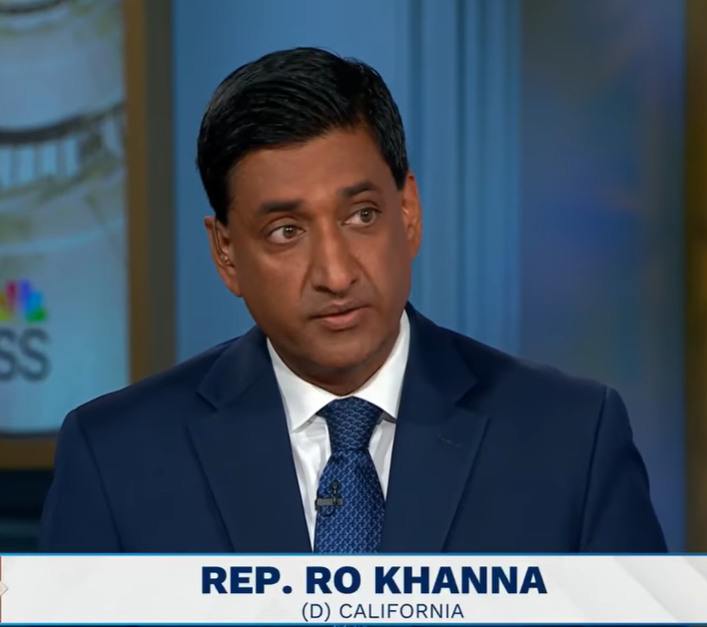
Rep. Ro Khanna once stood in front of cameras and said of Graham Platner, the Democrats' handpicked candidate for Susan Collins' Maine Senate seat, "Platner has asked for redemption. He says he's transformed and I believe him." That was after the Nazi chest tattoo had already surfaced. After Platner's Reddit posts telling a fellow veteran he deserved to die. After Platner apologized for cheating on his new wife with multiple women. After his texts and illicit pictures to women other than his wife were made public. Before the sexual assault allegations. Before the withdrawal.
Now Khanna wants us to know it all just sort of happened.
"If there's some self-reflection needed, it's that we all need to see the signs earlier," Khanna told reporters on July 12, delivering what may be the single most unintentionally revealing sentence in modern Democratic politics. See the signs earlier. As if a Nazi tattoo on a Senate candidate's chest was written in invisible ink.
Here's what we know. Graham Platner was the Democratic nominee challenging Republican Senator Susan Collins in Maine. The party invested heavily. Khanna personally endorsed him. Then the Nazi chest tattoo story broke. Democrats held firm. Then came sexual assault allegations. Platner withdrew from the race. Democrats are now scrambling to pick a replacement via convention.
Here's the obvious question that Khanna's careful phrasing was designed to avoid: did the party know about Platner's baggage and push forward anyway, or is their candidate vetting operation so broken that a Nazi tattoo and rape allegations genuinely caught them off guard?
Khanna's framing — "self-reflection" and "see the signs" — treats this like an honest mistake by well-meaning people who simply missed a few red flags. But the timeline doesn't support that reading. Khanna endorsed Platner after the tattoo was public knowledge. He told America the man had "transformed." That's not missing the signs. That's reading the signs and deciding they didn't matter because flipping a Senate seat did.
The Democratic counter-argument is that Platner's past was disclosed and that the sexual assault allegations were genuinely new information. But "we only knew about the Nazi tattoo" is not the defense they seem to think it is. In what universe does a major political party look at a candidate with a swastika on his chest and say, "Yeah, he's our guy?"
The broader pattern here is what makes Khanna's comments land so badly. This is the same party that spent years demanding Republicans disavow every controversial statement by every fringe figure within a fifty-mile radius of a campaign rally. They built an entire political infrastructure around guilt by association. And when their own candidate turned out to have an actual Nazi tattoo — not a bad tweet, not an awkward photo, a Nazi tattoo — the response was "he's transformed."
Khanna said we need to see the signs earlier. The signs were a swastika. They saw it. They endorsed him anyway.